
TOOLS
Education changes how you think. Tools change what you do.
The Care Plan Toolkit, clinical protocols, and patient education turn a shared philosophy into coordinated daily practice. They give practitioners across disciplines practical ways to support continuity without replacing clinical care or crossing scope.
Included with Peony PRO membership
THE CARE PLAN TOOLKIT
The Peony Care Plan™
The tool everything else supports — and the course that teaches you to use it.
Most practitioners already do a version of care planning — in their heads, in scattered notes, in the twenty minutes at the end of an appointment. The Care Plan makes it a repeatable process you can hand to a woman and that other practitioners can read.
It is a personalized, living document: her priorities, her questions, her care team, her goals, her decisions, in one place that travels with her. Unlike a treatment plan, it isn't focused on the disease. It's focused on her.
Six areas, one plan
| Area | The question it answers |
|---|---|
| 1 · Know Me | Who am I, and what matters most to me? |
| 2 · Understand My Cancer | What do I understand about my diagnosis and options? |
| 3 · Support My Whole Health | How am I caring for my whole self through this? |
| 4 · Putting My Plan into Practice | What are my goals and next steps, and how do I act on them? |
| 5 · Navigating My Care | How do I coordinate my team, appointments, and decisions? |
| 6 · Living Beyond | How do I move forward — through survivorship, or through change? |
The same six areas serve the whole continuum; different areas lead at different times. At diagnosis, Know Me and Understand My Cancer come forward. During treatment, Navigating My Care and Putting My Plan into Practice carry the load. In survivorship, Living Beyond becomes central.
The plan belongs to her. You facilitate Peony Care Planning — never creating, prescribing, owning, or overruling the plan. That distinction is not a technicality. It's the difference between a woman who is supported and a woman who is managed.
Available in digital, print, and downloadable formats. Not every woman wants an app, and the Method works either way.
The course comes with it
The Toolkit includes the course that teaches the Peony Care Method™ — whole-person assessment, facilitating a plan rather than authoring one, communicating across disciplines within scope, and coordinating support through diagnosis, treatment, recovery, and survivorship.
You don't buy the Care Plan and then buy the training. It's one toolkit, included with membership.
CLINICAL PROTOCOLS
What to do on Monday.
A growing library of practical guidance for symptom and side-effect support — written by clinicians who are doing this work now, and reviewed before it reaches you.
This is where the field is moving fastest, and it's the hardest thing to keep up with alone. Endocrine therapy support looks different than it did three years ago. So does what we know about exercise during treatment, and about which supplements matter.
Each protocol states its evidence base and its limits, so you know exactly how far it goes — and when a question belongs back with her oncology team.
Where a protocol calls for a product category, the catalog reflects it, at practitioner pricing.
PATIENT EDUCATION
Something to put in her hands.
A woman often leaves an appointment carrying more information than she can absorb. Every protocol and webinar therefore includes something clear enough to place in her hands when memory, energy, and attention are already stretched.
Worksheets, guides, question lists, plain-language explainers — written for the woman, not for the chart. When she leaves your office with more information than she can hold, these are what she takes home.
They're built to reinforce clinical conversations rather than compete with them. When she goes home and looks something up, the goal is that she finds the resource you would have handed her.
Created with Featured Experts and vetted partners, and reviewed before publication.
YOUR DIRECTORY LISTING
Where women find you.
Your credential-verified listing lives in the Peony Directory, inside the Peony App — filterable by discipline, specialty, and location, and prioritized above basic listings.
It's also where you find other verified practitioners across disciplines, and where they find you. Referrals move both ways.
FOR THE WOMEN YOU SERVE
Peony tools you can point her to.
These are built by Peony, for women. You don't administer them — you can recommend them with confidence, and members get practitioner pricing.
The Peony App
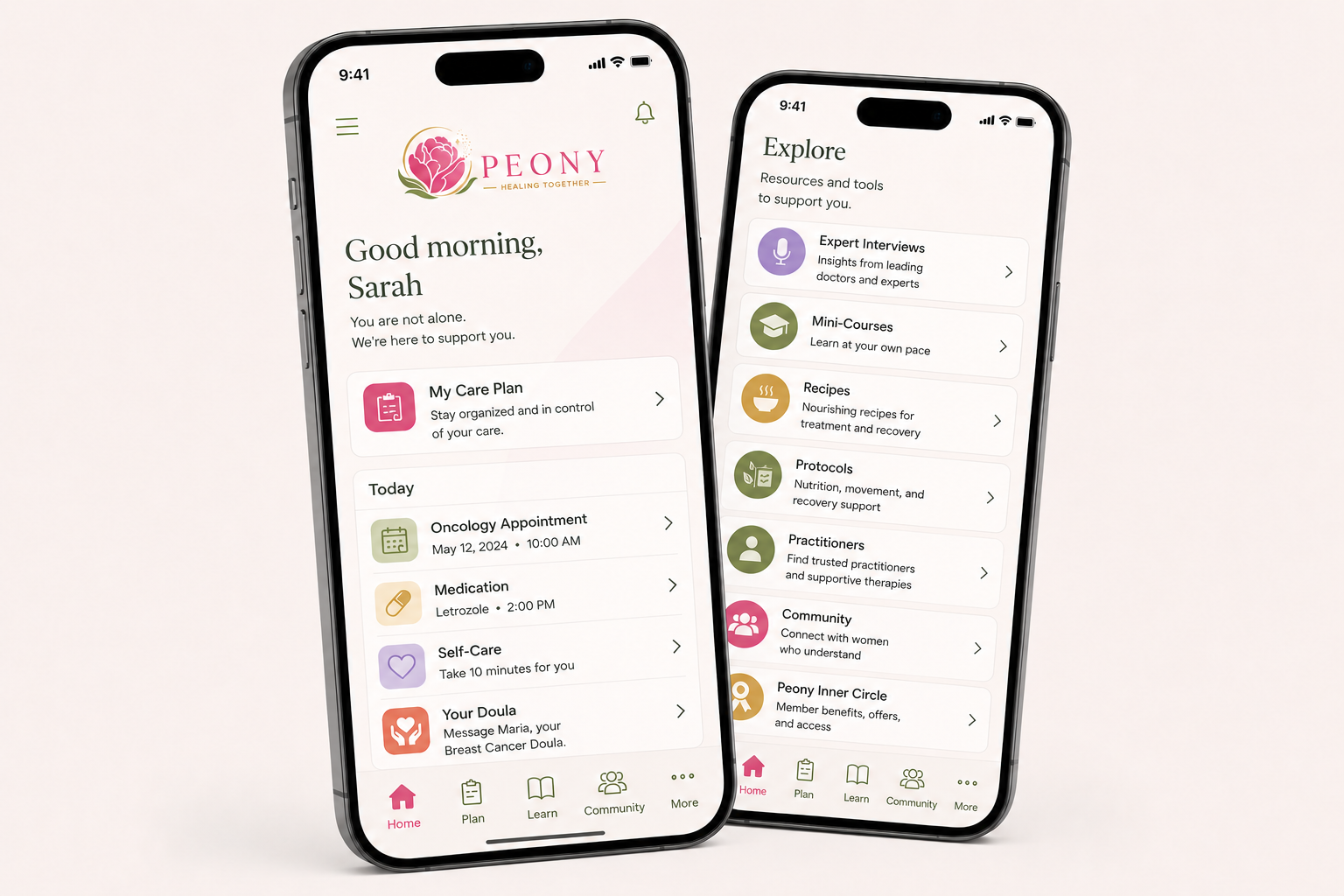
Where her Care Plan lives between appointments. She organizes information, prepares for appointments, tracks symptoms and recovery, reaches trusted resources, and follows through on what she and her team decided. She controls what's shared and with whom. Launching October 19, 2026.
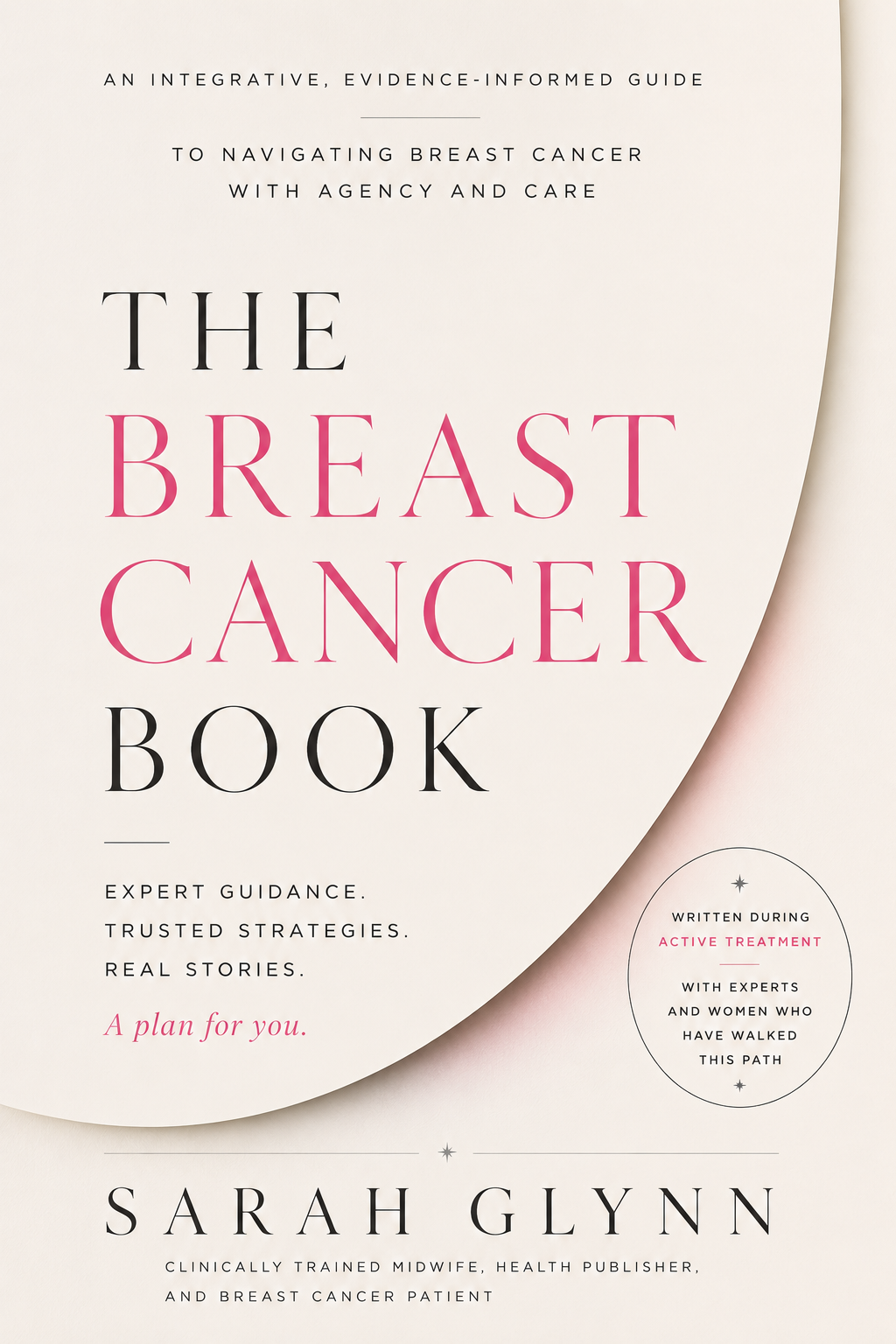
The Breast Cancer Book
Written by Sarah Glynn during her own breast cancer treatment. It introduces the Peony Care Method™ to women directly and gives them a place to begin building their own Care Plan — often a woman's first encounter with the framework.
Educational resources
Guides, worksheets, and plain-language explainers, available to share.
WHAT THESE TOOLS ARE NOT
Boundaries, stated plainly.
- Not a medical record. Keep three things separate: her Care Plan, which belongs to her; your own required service notes; and the clinical medical record. The Peony Care Plan does not replace either record.
- Not a replacement for the relationship. Digital tools extend continuity into the space between encounters. They never replace the professional relationship and judgment at the center of the Method.
- Not diagnostic or prescriptive. These tools organize what she understands and what she wants to ask. They do not interpret, advise, or recommend.
- AI-assisted features are used transparently. Where they exist, she is told. Competent, ethical use of digital tools — including transparent use of AI — is a standing professional expectation.
Digital interfaces implementing the Care Plan target WCAG 2.2 AA conformance.
WHAT PRACTICES SEE
- Women who arrive prepared, with their questions already written down
- Fewer repeated conversations across providers
- Recommendations that get followed because they were captured, not remembered
- Clearer handoffs between disciplines
- Less time reconstructing what happened since the last visit
None of this replaces clinical judgment. It gives clinical judgment better information to work with.
GETTING STARTED
Put your professional values into practice.
Over time, these tools should become part of how you practice: a Care Plan that keeps priorities visible, resources you can place in a woman's hands, protocols that clarify what the evidence supports, and a verified profile that shows how your work fits into a larger continuum.
Free to apply · Reviewed within five business days · Payment only after approval · $450 founding year
Not ready?